Two-year-olds thrive on books filled with simple stories, vibrant illustrations, and interactive elements that invite participation. The best books for this age group feature repetitive text, relatable characters, and sturdy pages that withstand enthusiastic handling. At this developmental stage, toddlers are rapidly building vocabulary, learning to follow simple narratives, and beginning to understand cause and effect through stories.
Books serve as powerful tools during the toddler years, when children absorb new words at an astonishing rate and develop emotional understanding through characters and situations. A well-chosen book can turn a wiggly toddler into an engaged listener, building attention span while fostering a love of reading that lasts a lifetime.
The recommendations that follow represent books that excel across multiple criteria: developmental appropriateness, illustration quality, text complexity, physical durability, and inclusive representation. Each title offers specific benefits aligned with what 2-year-olds need most, from language development and emotional recognition to sensory exploration and early literacy skills. Whether you’re building a home library or selecting books for a classroom, these choices provide the foundation for meaningful reading experiences that grow with your child.
How We Selected These Books
Our literature team evaluated hundreds of titles to identify books that truly serve 2-year-olds’ unique developmental needs. Each selection went through a rigorous review process that considered both educational impact and real-world durability, because even the most beautifully illustrated book loses value if it can’t survive enthusiastic toddler handling.
We applied six core criteria to build this curated list:
- Developmental appropriateness: themes and concepts that match 2-year-old cognitive abilities and emotional understanding
- Interactive elements: textures, flaps, or participation prompts that support interactive book reading and sustained engagement
- Language development support: repetition, rhythm, and vocabulary-building opportunities that strengthen emerging speech skills
- Diversity and inclusion: representation of different families, cultures, abilities, and experiences that reflect the real world
- Illustration quality: clear, appealing artwork with enough detail to spark conversation but not overwhelm young viewers
- Physical durability: sturdy construction that withstands repeated readings, dropped corners, and the occasional chew test
Our team includes early childhood educators and children’s literature specialists who tested these books with actual 2-year-olds, observing which titles held attention, sparked conversation, and invited repeat requests. We prioritized books that parents and caregivers genuinely enjoy reading multiple times, because shared reading works best when adults stay engaged too.
Our Top Book Picks for 2-Year-Olds
1. Brown Bear, Brown Bear, What Do You See?, Rhythm and Repetition
Bill Martin Jr.’s beloved classic works because its simple, repetitive structure lets 2-year-olds anticipate what comes next. Each page follows the same pattern, “Brown Bear, Brown Bear, what do you see? I see a red bird looking at me”, creating a predictable rhythm that helps toddlers join in before they can read. Eric Carle’s bold, collage-style illustrations make each animal instantly recognizable, reinforcing color concepts (brown bear, red bird, yellow duck) through both text and visuals. This call-and-response format builds memory skills and confidence as children successfully “predict” the next page. It’s particularly effective for language development because the repetition embeds new vocabulary naturally, turning reading time into an interactive conversation between adult and child.
2. Dear Zoo, Interactive Lift-the-Flap Fun
Rod Campbell’s Dear Zoo has captivated toddlers since 1982 with its simple premise: a child writes to the zoo asking for a pet, and the zoo sends various animals, all wrong for different reasons. Each animal hides behind a sturdy flap labeled with descriptors like “too big” or “too grumpy,” building anticipation before the reveal.
The lift-the-flap format turns passive listening into active discovery. Two-year-olds develop fine motor skills as they manipulate each flap, while the repetitive sentence structure (“So they sent me a…”) reinforces language patterns. The book naturally teaches comparative concepts, elephants are big, monkeys are naughty, without feeling instructional.
What makes this book exceptional is its durability. The thick board pages and reinforced flaps withstand enthusiastic handling, and the clear illustrations help children connect words with animals they’re learning to name.
3. The Very Hungry Caterpillar, Learning Through Transformation
Eric Carle’s timeless classic follows a tiny caterpillar’s journey from egg to butterfly, delivering multiple learning opportunities through its innovative die-cut design. The holes punched through each page let toddlers physically trace the caterpillar’s path, turning abstract concepts into tactile experiences. Two-year-olds naturally grasp the counting progression as the caterpillar eats through one apple, two pears, three plums, building number recognition without formal instruction. The days-of-the-week sequence introduces calendar concepts in a memorable context, while the caterpillar’s eventual stomachache after overindulging subtly reinforces healthy eating habits. The transformation into a beautiful butterfly captivates young minds, making this book perfect for discussing change and growth. Carle’s distinctive collage illustrations in vibrant colors hold toddler attention while the rhythmic, repetitive text invites participation and prediction.
4. Goodnight Moon, Bedtime Routine Building
Margaret Wise Brown’s 1947 masterpiece remains a bedtime staple for good reason. The gentle, rhythmic text creates a calming cadence perfect for winding down active toddlers. As the little bunny says goodnight to everything in the room, from the red balloon to the quiet old lady whispering “hush”, your child practices naming objects while absorbing the ritual of settling down for sleep.
The book’s repetitive structure gives 2-year-olds something to anticipate and eventually “read” along with you. Clement Hurd’s illustrations gradually darken as night falls, visually reinforcing the transition to bedtime. Many parents report their toddlers request this book specifically at night, making it a powerful tool for establishing consistent sleep routines. The methodical goodnight-saying teaches patience and closure, valuable skills when you’re trying to end the day peacefully.
5. Where’s Spot?, Problem-Solving Adventures
Eric Hill’s Where’s Spot? turns reading into an active search mission. Each page presents a different hiding place where Spot might be, with a flap concealing a different animal instead. Your toddler lifts the door to find a bear, opens the clock to discover a snake, and checks under the stairs for a lion before finally finding the missing puppy.
This simple premise teaches spatial concepts, inside, under, behind, while building anticipation and memory. Two-year-olds quickly learn the pattern and start predicting what’s behind each flap. The repetitive question-and-answer structure supports language development, and many children memorize the responses before they can read. The sturdy board book withstands enthusiastic flap-lifting, making it ideal for independent exploration and group story time alike.
6. Press Here, Cause and Effect Discovery
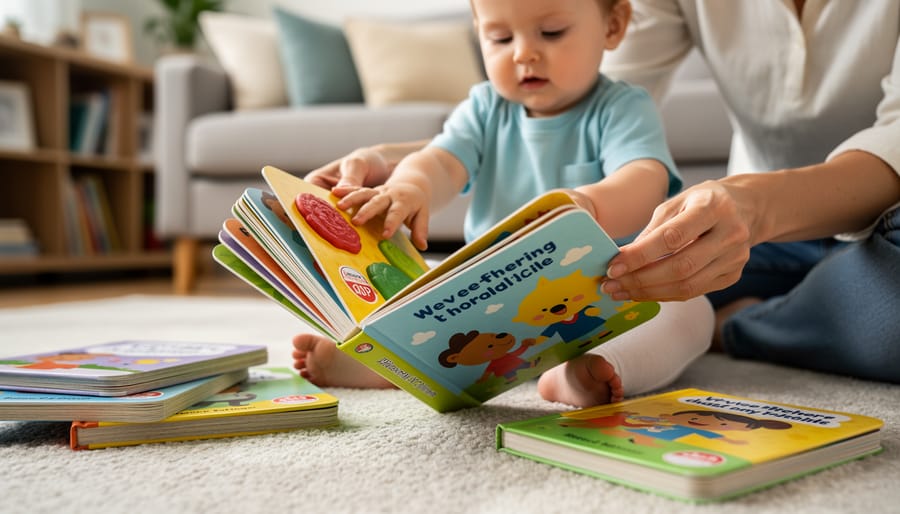
Hervé Tullet’s Press Here transforms the simple act of turning pages into an interactive experiment that captivates 2-year-olds. This ingenious book instructs readers to press dots, shake the book, tilt it sideways, and even blow on the pages, actions that appear to make colored dots multiply, change position, and rearrange themselves with each turn. The magic lies in the illusion of control: toddlers believe their actions directly cause the changes, which builds their understanding of cause and effect while teaching them to follow simple instructions. The book requires no batteries or screens, yet delivers an experience that feels remarkably responsive. It’s particularly valuable for developing listening skills and sequential thinking, as children learn to complete one action before moving to the next page to see the results.
7. The Snowy Day, Diverse Representation in Classic Literature
Published in 1962, Ezra Jack Keats’s “The Snowy Day” broke barriers as one of the first mainstream picture books to feature an African American child as the protagonist. Two-year-olds connect with Peter’s wordless wonder as he explores fresh snow, leaving footprints and making angels. The simple, collage-style illustrations capture universal childhood joy while providing representation that many families cherish. The book’s gentle pacing matches toddler attention spans perfectly, each page shows one clear action, from trying to save a snowball in his pocket to the delightful discovery that it melted. This Caldecott Medal winner introduces weather concepts and seasonal changes through Peter’s authentic curiosity, making it both a milestone in children’s literature and a timeless story that celebrates every child’s capacity for wonder.
8. Chicka Chicka Boom Boom, Alphabet Introduction
Bill Martin Jr. and John Archambault created an alphabet book that transforms letter learning into a playful adventure. The rhythmic text follows lowercase letters racing up a coconut tree, tumbling down, and receiving care from uppercase letters, like parents coming to the rescue. The singsong cadence makes this book incredibly easy to memorize, turning letter recognition into something toddlers request repeatedly.
The vibrant illustrations by Lois Ehlert use bold colors against black backgrounds, making each letter visually distinct. Two-year-olds won’t master the entire alphabet yet, but they’ll absorb letter shapes and sounds through the infectious rhythm. Many children start identifying their name’s first letter after repeated readings. The repetitive “Chicka chicka boom boom, will there be enough room?” refrain becomes a favorite phrase toddlers love to chant along with.
9. Everywhere Babies, Celebrating All Families
This board book masterfully captures the universal experience of babyhood while showcasing the beautiful diversity of families and cultures. Simple, rhythmic text like “Every day, everywhere, babies are born” pairs with illustrations featuring babies of different skin tones, family structures, and cultural backgrounds engaged in common activities, eating, playing, sleeping, and being loved.
The inclusive representation helps toddlers see themselves reflected in books while naturally introducing the concept that families come in many forms. The gentle, affirming tone celebrates each baby’s uniqueness while emphasizing shared experiences, making it perfect for building empathy and cultural awareness from the earliest ages. The sturdy board format withstands enthusiastic handling, and the predictable text structure supports language development while reinforcing that all babies, and all families, deserve recognition and celebration.
10. Don’t Let the Pigeon Drive the Bus!, Interactive Storytelling
Mo Willems’ Don’t Let the Pigeon Drive the Bus! turns reading into a conversation. The persistent pigeon begs, pleads, and bargains to drive the bus, and your toddler gets to be the authority who says no. This role reversal is powerful for 2-year-olds who hear “no” constantly, suddenly they’re making the rules.
The book works because it invites vocal participation. Kids shout responses at the pigeon, building confidence in expressing opinions and making decisions. The simple illustrations keep focus on the pigeon’s increasingly desperate expressions, which toddlers find hilarious. Each page presents a new argument to resist, teaching persistence recognition and boundary-setting.
It’s also remarkably short, respecting young attention spans while delivering genuine laughs and empowerment through repeated readings.
11. Baby Faces, Emotional Recognition
Baby Faces uses photography instead of illustrations to show real infants expressing genuine emotions, joy, sadness, surprise, and anger. Two-year-olds are just beginning to name feelings, and seeing these emotions on actual faces rather than cartoon characters helps them connect words to real-world expressions. The sturdy board book format withstands repeated handling while your toddler points to happy, sad, or silly faces during read-aloud sessions.
This book works particularly well for emotional regulation practice. When your child is upset, you can refer back to the sad or angry faces you’ve explored together, giving them language to express what they’re experiencing. The simple, one-word labels paired with clear facial expressions make this an accessible first step in building emotional vocabulary that will serve children throughout early childhood.
12. The Pout-Pout Fish, Feelings and Friendship
The Pout-Pout Fish by Deborah Diesen introduces toddlers to emotional vocabulary through the story of a fish who believes he’s stuck with a permanent pout. The rhythmic, rhyming text makes it easy for two-year-olds to anticipate what comes next, while the exaggerated expressions help children identify different feelings. As Mr. Fish encounters friends who try to cheer him up, young readers learn that emotions can change and that connections with others affect how we feel. The surprise ending teaches that sometimes our understanding of ourselves shifts through interactions. The aquatic illustrations captivate toddlers, and the repeating “blub, bluuub, bluuuub” refrain becomes an interactive element they’ll eagerly join. This book builds emotional intelligence while reinforcing that feelings are temporary and friendship matters.
13. Julian Is a Mermaid, Gender Expression and Imagination
Julian, a young boy who dreams of becoming a mermaid after seeing three spectacular mermaids on the subway, comes to life in this wordless wonder from Jessica Love. The stunning watercolor and gouache illustrations tell the complete story without a single word, making it accessible for 2-year-olds who can create their own narrative while building visual literacy skills.
What sets this book apart is its celebration of imagination and self-expression. When Julian’s grandmother takes him to see the Coney Island Mermaid Parade, she supports his desire to dress as a mermaid with love and acceptance. The book normalizes gender-expansive play and teaches toddlers that their interests are valid regardless of societal expectations.
The art alone captivates children, ethereal mermaids with flowing hair, vibrant yellows and turquoises, and Julian’s pure joy radiating from every page. Two-year-olds connect with the fantasy elements and the affirming relationship between Julian and his grandmother.
14. Llama Llama Red Pajama, Managing Separation Anxiety
Anna Dewdney’s “Llama Llama Red Pajama” captures the universal toddler experience of bedtime separation with remarkable emotional accuracy. When Baby Llama’s mama goes downstairs after tucking him in, his worry escalates from whimpering to full llama drama, a progression most parents recognize instantly. The singsong rhyming text (“Llama llama red pajama / waiting waiting for his mama”) mirrors how anxiety builds in a toddler’s mind, validating their feelings while showing that mama always returns. The expressive illustrations let 2-year-olds see their own emotions reflected back, which helps them name and process those big feelings. This book doesn’t dismiss separation fears as silly; instead, it acknowledges them as real while modeling reassurance and resolution, making it an excellent tool for easing bedtime struggles.
15. We’re All Wonders, Kindness and Acceptance
This gentle picture book adaptation of R.J. Palacio’s Wonder introduces the core message of kindness and acceptance in a way that resonates with toddlers. Through vibrant illustrations and simple, affirming text, young readers meet Auggie, a child who looks different but dreams, plays, and feels just like everyone else.
The book’s strength lies in its accessibility. Two-year-olds naturally notice differences in appearance, and We’re All Wonders provides a framework for celebrating rather than fearing what makes each person unique. The positive, uplifting language helps parents start conversations about empathy early, building emotional intelligence alongside literacy skills.
The illustrations capture moments of joy, friendship, and imagination that toddlers immediately recognize from their own experiences. This shared connection makes the message feel personal rather than preachy, planting seeds of compassion that will grow throughout childhood.
What Makes a Book Perfect for Two-Year-Olds
Two-year-olds are at a fascinating developmental crossroad where their curiosity explodes and their communication skills rapidly expand. Understanding what’s happening in their growing minds helps you choose books that truly resonate.
At this age, attention spans typically range from five to eight minutes for engaging activities. Books need to capture interest quickly through bright illustrations, repetition, or interactive elements. Your toddler can follow simple story sequences but thrives on predictability, the comfort of knowing what comes next. That’s why books with repeated phrases or cumulative patterns work beautifully.
Language development takes center stage during this period. Most 2-year-olds add several words weekly to their vocabulary, moving from two-word combinations toward short sentences. The best books introduce new words in context, showing a “caterpillar” while saying it, or naming emotions alongside facial expressions. They use clear, simple sentences that model proper grammar without overwhelming.
Motor skills influence how toddlers interact with books. Their fingers can now turn sturdy pages, lift flaps, and point to pictures. Board books remain practical for enthusiastic handling, though some gentle supervision allows introducing quality picture books with paper pages. Interactive features like textures, pop-ups, or holes to poke through transform reading into a hands-on exploration.
Emotional development matters too. Two-year-olds experience big feelings they can’t yet name or manage well. Books that reflect their daily experiences, bedtime routines, saying goodbye, feeling frustrated, provide language for emotions and reassurance that their feelings are normal. Characters who navigate similar challenges become trusted companions, making books both mirrors and guides during this transformative year.
Frequently Asked Questions
How many books should I read to my 2-year-old each day?
Aim for at least three to five books daily, spread throughout the day. Short, frequent reading sessions work better than one long session since toddlers have limited attention spans.
What should I do when my toddler tears or chews books?
Start with sturdy board books that withstand rough handling, and model gentle page-turning during reading time. Keep special paper books for supervised reading sessions until your child develops more careful handling skills.
When can I transition from board books to regular picture books?
Most children are ready around age three, but watch for signs your toddler can turn pages carefully and no longer mouths books. Keep a mix of both formats available based on your child’s handling skills rather than strict age guidelines.
How do I build a home library on a budget?
Visit your local library regularly for free access to hundreds of titles, swap books with other parents, and watch for sales at secondhand bookstores. Focus on quality over quantity, ten well-chosen books your child loves beats fifty they ignore.
Reading sessions don’t need elaborate preparation. Keep books accessible in baskets around your home so your toddler can grab favorites independently. Rotate available titles every few weeks to maintain interest without overwhelming your child with too many choices at once.
When your 2-year-old wants the same book repeatedly, that’s actually beneficial. Repetition helps language development and builds confidence as they start recognizing words and anticipating story elements. Balance their favorites with one new book each week to gently expand their literary world.
The best books for 2-year-olds share three essential qualities: they capture attention through rhythm, repetition, or interaction; they match where toddlers are developmentally; and they reflect the diverse world children live in. Whether you’re drawn to classic favorites or contemporary gems, following your child’s interests while gently introducing new themes creates the richest reading experience.
You don’t need all fifteen of these books tomorrow. Start with a few that resonate with your family, then expand gradually. Notice which illustrations make your toddler point, which stories prompt giggles or requests for “again!” Those reactions guide you toward building a collection that truly connects.
Reading together at this age does more than teach words or colors. You’re showing your child that books hold joy, that their questions matter, and that your undivided attention is theirs for these quiet moments. These daily read-aloud sessions lay groundwork for literacy that extends far beyond toddlerhood. Pair your reading routine with summer reading activities or seasonal explorations to keep the love of stories growing year-round.
Every page you turn together strengthens both language skills and your bond. That’s the real magic of reading with two-year-olds.