The best science fiction books of all time are the ones readers keep returning to, and ten stand out for families, classrooms, and curious teens: A Wrinkle in Time, The Giver, Ender’s Game, The Left Hand of Darkness, Kindred, Dune, The Hitchhiker’s Guide to the Galaxy, Frankenstein, Parable of the Sower, and The Martian. Together they cover courage, ethics, history, ecology, humor, and problem-solving, so there’s a starting point for almost every reader.
We chose them for staying power, strong storytelling, and the conversations they spark. Some suit younger readers ready for big ideas. Others are better for older teens and adults, and we’ll flag age-appropriate guidance for each one so you can choose with confidence. You’ll also find voices from different backgrounds and perspectives, including LGBTQ-inclusive picks.
If you’re curious about what’s new, 2026 has plenty to talk about. The Hugo Awards finalists were announced on April 21, 2026, and this year’s Hugos include the Lodestar Award for Best Young Adult Book, a handy place to look for current teen reads. The Arthur C. Clarke Award shortlist is another good source. Still, the classics below give new releases something to measure against.
Start here, then add the newer books your reader gravitates toward.
How We Chose These Science Fiction Favorites
Choosing the best science fiction books of all time is a bit like building a family bookshelf: you want favorites that have stood the test of time, plus a few surprises. This list is a curated selection by literature-minded editors, not the result of hands-on testing. We looked for stories that families, teachers, and readers have kept coming back to, and we kept caregivers in mind at every step.
Here is what guided our picks:
- Lasting influence and reader love across generations.
- Clear, readable storytelling that draws readers in.
- Themes that spark conversation, like curiosity, fairness, identity, belonging, and caring for the planet.
- A mix of well-known and lesser-known voices, with diverse authors and characters, including LGBTQ+ perspectives.
- An age-appropriate fit, with a note on who each book suits best.
We also aimed for balance rather than chasing only the most popular titles. You will find gentle read-alouds alongside denser adult classics, so there is something for newer readers, teens, and grown-ups. Each entry includes age-appropriate guidance and a brief caregiver note, so you can decide quickly whether a book is ready for the young reader in your life. Think of the list as a starting point for conversation, not a rulebook.
Why Classic Science Fiction Still Matters in 2026
Every year, award season is a reminder that science fiction keeps growing. The 2026 Clarke Award shortlist and the 2026 Hugo Awards finalists, announced on April 21, 2026 by LAcon V, the 84th World Science Fiction Convention, show that new voices are still reshaping the genre. Roundups like Five Books’ best sci-fi of 2026 say the same thing from a different angle.
Newer stories don’t replace the classics, though. They talk to them. A reader who has met the gentle courage of A Wrinkle in Time or the big questions of The Giver will notice the same ideas turning up in fresh settings.
Families looking at newer YA titles have a handy pointer, too. The Hugo Awards include a 2026 Lodestar Award for YA a good place to browse teen-friendly books.
Why does this matter for young readers? Educators often point out that science fiction asks “what if?” in a safe, imaginative space. That builds imagination, since readers picture worlds that don’t exist yet. It builds empathy, since they step into characters whose lives look very different from their own. And it builds critical thinking, since they weigh the choices and consequences those stories explore.
The Best Science Fiction Books of All Time, Curated
1. A Wrinkle in Time, Courage and Curiosity for Younger Readers
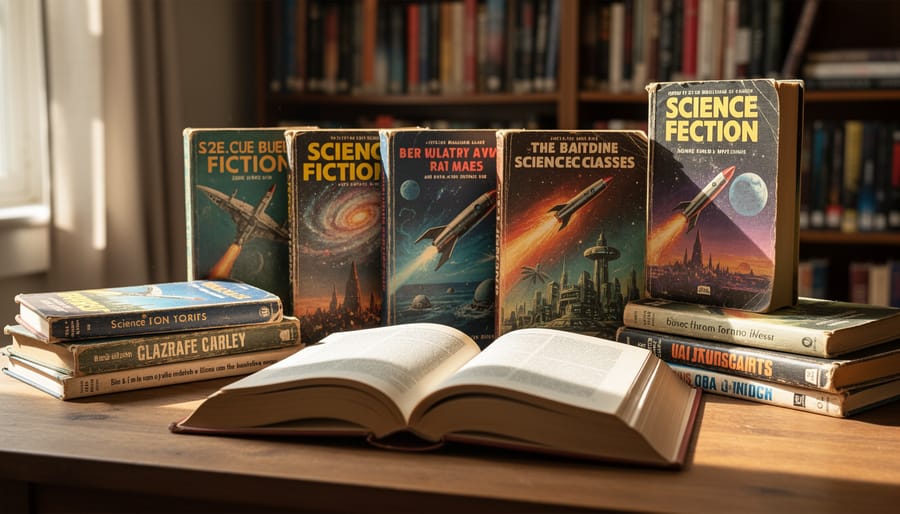
A Wrinkle in Time is a gentle, imaginative adventure about Meg Murry, a stubborn and awkward girl who travels across space to rescue her father. Along the way, the story celebrates family, bravery, and standing up for what is right, even when you feel small. Meg learns that her quirks are actually her strengths, which is a comforting message for kids who feel different.
It’s a lovely pick for middle-grade readers, and it works beautifully as a read-aloud, since its big ideas invite lots of pauses for conversation. Caregivers should know a few scenes feel eerie and tense, so it helps to read along and talk about what’s happening. Ask your child what courage means to them.
2. The Giver, A Conversation Starter About Choice and Freedom
Lois Lowry’s The Giver follows twelve-year-old Jonas, who lives in a calm, orderly community with no pain, no conflict, and no choices. When he is chosen to receive the community’s memories, he begins to see what that peace has cost.
This is a standout for classroom discussion. It invites big questions about freedom, fairness, individuality, and whether safety is worth giving up real feelings. Kids often want to keep talking long after the last page.
Best for upper middle grade readers and teens. Caregivers should know it touches on mature themes, including death and the loss of personal choice, and a few moments may feel heavy. Reading it together, or pausing to chat, helps young readers process what they find.
3. Ender’s Game, Strategy, Leadership, and Hard Questions
In Ender’s Game, a gifted boy named Ender is sent to a military-style training school in space, where every lesson tests his cleverness. Behind the games and battle simulations sits a quieter question: how much of yourself are you willing to give up to win, and what do leaders owe the people they command?
It’s a strong pick for teens who like strategy and puzzle-solving. Because the story brings up bullying, isolation, and violence, caregivers may want to read it alongside their teen or talk through those moments together. If your reader enjoys this kind of thoughtful challenge, it fits well on a shelf of big kid books for growing minds.
4. The Left Hand of Darkness, Gender and Understanding Others

Ursula K. Le Guin’s celebrated novel follows an envoy who visits a wintry planet where people have no fixed gender, and slowly builds an unlikely friendship with a local leader. It’s a quiet, thoughtful story about trust, loyalty, and learning to see someone clearly across a gulf of cultures.
It earns its place on this list because it invites kind, open conversation about gender and difference. That makes it a valuable pick for LGBTQ-inclusive reading lists, and a nice companion to our Pride Month guide.
Best for older teens and adults. The pacing is slower and the ideas are layered, so it rewards patient readers and makes a great book to discuss together.
5. Kindred, History, Race, and Resilience
Octavia E. Butler’s Kindred follows Dana, a young Black woman in 1976 who is pulled back in time to a Maryland plantation, where she must protect an ancestor in order to protect her own future. It’s a gripping story that uses time travel to make history feel immediate, and it opens honest conversations about racism, survival, and resilience. Key themes include family, courage, and the weight of the past. We suggest it for older teens and adults. Caregivers should know it contains depictions of slavery, violence, and abuse, so previewing it and reading together can help.
6. Dune, A Sweeping Story of Ecology and Power
Frank Herbert’s Dune is a sweeping story set on a desert planet where water is precious and power is fiercely contested. Young Paul Atreides is pulled into a struggle over a valuable resource, and the novel uses his journey to explore ecology, politics, and destiny. Its world-building is some of the richest in the genre, and it invites big conversations about how people shape their environment.
Best for older teens and adults. It’s long and dense, with many characters and invented terms, so it rewards patient readers. Some families find it easier to start by listening, and our guide to Dune audiobooks explains what to know first.
7. The Hitchhiker’s Guide to the Galaxy, Science Fiction With a Smile
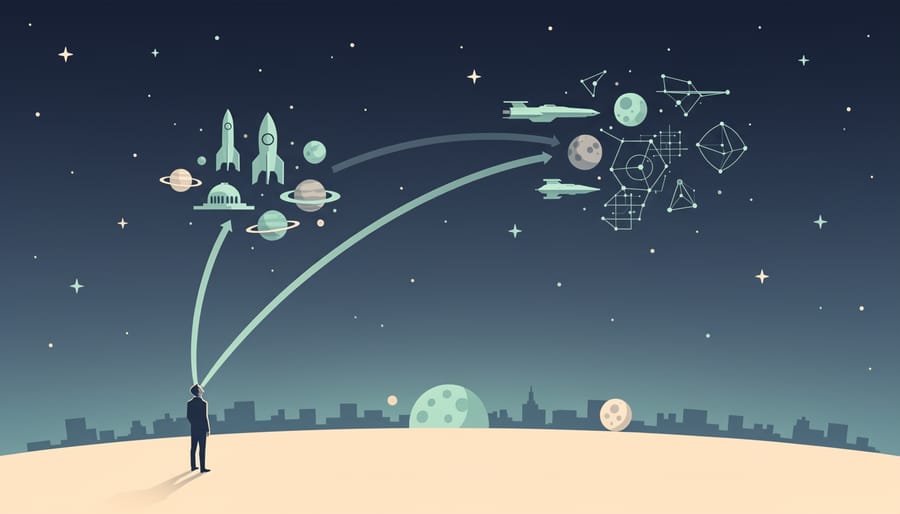
If you have a reader who groans at the word “classic,” start here. Douglas Adams’s novel follows an ordinary man swept off Earth moments before it’s demolished, and it never stops being funny. The jokes are quick, the chapters are short, and the story moves along without a lot of heavy world-building to wade through.
That makes it a great pick for reluctant readers. Humor lowers the pressure, and many teens finish it feeling surprised that science fiction can be this much fun. It also shows that big ideas about the universe don’t have to be solemn.
Best for teens and up. Caregivers should know there’s some mild language and a lot of dry, absurd humor that works best for readers who enjoy a bit of silliness.
8. Frankenstein, Where Science Fiction Began
Mary Shelley’s novel is often called the first science fiction book, and it still gets readers talking. A young scientist builds a living creature, then turns away from it, and the story asks what we owe to the things we create. It’s a strong pick for discussing responsibility, kindness, and the real-world consequences of invention. Many readers are surprised by how much the creature longs for connection and understanding.
Best for: older teens. The language is formal and the pacing slow, so reading together can help. Caregivers should know it includes loss, grief, and some dark moments.
9. Parable of the Sower, Hope and Community in Hard Times
Octavia E. Butler’s Parable of the Sower follows a young woman named Lauren Olamina as her neighborhood crumbles in a near-future America. Rather than give in to fear, she begins imagining a new way of living, and gathers people who might build it with her.
What makes it a standout is its hope. It asks how communities form, how people care for one another when things fall apart, and what it takes to start again.
Best for older teens and adults. Caregivers should know it contains violence, loss, and other mature themes, so previewing it first is wise. Reading it together can open meaningful conversations about resilience and cooperation.
10. The Martian, Problem-Solving and STEM Inspiration
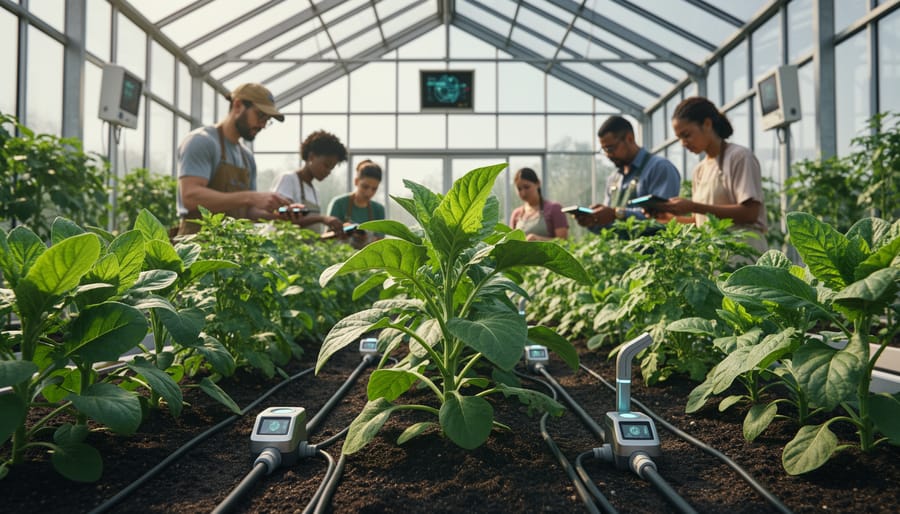
The Martian is the book to hand a teen who says science is boring. Astronaut Mark Watney is stranded on Mars and has to “science the heck” out of one problem after another to stay alive. He fixes things, does the math, and cracks jokes the whole way through. The humor keeps the technical parts light, and it shows how perseverance and teamwork, with plenty of people back on Earth pitching in, can solve problems that seem impossible.
It suits teens and adults, and it’s a great STEM spark. Caregivers should know the language is strong, with frequent swearing throughout.
Where to Find the Best New Science Fiction Books of 2026
If you’re curious about what’s new on the shelves, a few trusted resources can point you in the right direction. Roundups like Five Books’ “Best Sci-Fi Books of 2026,” along with other 2026 best-of and most-anticipated lists, are a friendly place to start browsing. They’re handy when you want fresh ideas to pair with the classics above.
Award season is another useful guide. The 2026 Arthur C. Clarke Award shortlist is worth a look, and the 2026 Hugo Awards finalists were announced on April 21, 2026 by LAcon V, the 84th World Science Fiction Convention. Families may especially like that the Hugo Awards include a Lodestar Award for Best Young Adult Book, a helpful pointer if you’re shopping for teen readers.
A few titles that show up on 2026 lists are good examples to look up for yourself:
– The Poet Empress
– Daggermouth
– Blood Bound: A Novel
– Threshing Day
We haven’t included authors, publishers, or release details here, so check a bookstore or library catalog for the specifics.
Expert tip: before handing any new release to a young reader, take a moment to check its age suitability. Read a short description, skim reviews from trusted sources, or preview the opening chapters yourself. Newer science fiction and fantasy titles can include mature themes, and a quick look helps you match the story to your reader. Pairing one of these new picks with a timeless favorite from our list is a lovely way to build a balanced reading shelf.
Choosing the Right Science Fiction Book for Your Young Reader
A book that thrills one eleven-year-old can leave another puzzled, so a little preparation goes a long way. Start by previewing the themes and content. A quick skim of the opening chapters, or a look at a trusted reviewer’s notes, tells you whether a story suits your reader. If you’re trying to choose adventure books or other genre picks, the same habit applies, and knowing the content to watch for helps you match a story to a reader’s maturity.
For newer readers, begin with something shorter or funnier. The Hitchhiker’s Guide to the Galaxy shows science fiction can be playful, while A Wrinkle in Time is a gentle read-aloud. Then read together and talk about the big ideas. Ask what the characters should have done, or whether a rule seems fair. Those conversations build empathy and critical thinking.
For teens, YA-focused recognition such as the Lodestar Award for Best YA is a handy way to spot newer titles written with older readers in mind. Finally, choose inclusively. When children meet characters who share their backgrounds, families, or questions, stories feel like they belong to them.
Frequently Asked Questions About Science Fiction Books
What is the best science fiction book of all time?
There isn’t one agreed answer, since taste and reading level vary so much. Dune, Frankenstein, and The Left Hand of Darkness are often named as favorites, and A Wrinkle in Time is a lovely pick for younger readers.
What age is science fiction appropriate for?
It depends on the book. A Wrinkle in Time suits middle-grade readers, while Kindred and Parable of the Sower are better for older teens and adults, so a quick preview of themes is always worthwhile.
Is science fiction good for reading skills and STEM learning?
Yes, it can be. Stories like The Martian show problem-solving in action, and big ideas in books such as The Giver give families plenty to talk about together.
Where should I start with new science fiction releases in 2026?
Browse roundups like Five Books’ best sci-fi of 2026 and the 2026 Arthur C. Clarke Award shortlist. For teen readers, the Hugo Awards include a Lodestar Award for Best Young Adult Book, so that category is a handy place to look.
Looking for LGBTQ-inclusive reads? The Left Hand of Darkness is a thoughtful starting point for older teens and adults, with its exploration of gender and friendship across cultures. Whichever book you choose, reading together and chatting about the big ideas is a warm way to build a lifelong love of stories.
Classic science fiction and the Best New Science Fiction Books of 2026 work best together. The timeless stories give young readers a strong foundation, and the fresh releases show how much the genre keeps growing and changing.
Why not start small? Pick one all-time favorite from this list, perhaps A Wrinkle in Time or The Hitchhiker’s Guide to the Galaxy for a gentle, friendly welcome, and pair it with one new release that catches your eye. Read them side by side, talk about the big ideas, and notice what sparks curiosity. The right story at the right moment can turn a hesitant reader into a lifelong book lover, and that is a gift worth sharing.