Finding the right Q books for preschoolers gives young learners a fun, effective way to master one of the alphabet’s trickiest letters. Q rarely appears without its partner U, and its distinctive “kw” sound can confuse children just starting their phonics journey. The best Q books combine clear letter recognition with engaging stories that feature queens, quilts, and quiet moments, making this challenging consonant stick through repetition and context.
Research shows children benefit from focused exposure to less common letters, particularly when stories provide meaningful context rather than isolated drills. Starting early matters. Many parents begin alphabet exploration with books for 2-year-olds and continue with letter-specific titles as their child approaches three to five years old. Q books fit naturally into this progression, offering targeted practice exactly when preschoolers need it most.
The fifteen books in this guide have been selected for their educational value, age-appropriate content, and ability to make Q memorable. Each recommendation includes clear age guidance and highlights what makes it effective for teaching this uncommon letter. Whether you’re a parent supporting home learning or an educator building your classroom library, you’ll find practical options that turn Q from puzzling to perfectly clear.
How We Selected These Q Books
Choosing the right Q books for preschoolers requires careful evaluation, which is why our literature expert team at Book Worms assessed dozens of titles to create this curated list. We applied rigorous criteria to ensure each book meets the developmental needs of 3-5 year olds while making Q letter learning genuinely engaging.
Our selection process considered:
- Age-appropriate content that matches preschool comprehension and attention spans
- Clear Q pronunciation examples that emphasize the distinctive ‘qu’ sound blend
- Engaging visuals with vibrant illustrations that support letter recognition
- Educational concepts woven naturally into storytelling without feeling like drills
- Diverse characters and themes reflecting varied families and experiences
- Expert-vetted quality based on early literacy research and proven teaching methods
Every recommended book balances entertainment with learning outcomes. We prioritized titles that present Q in memorable contexts, whether through repetitive text that reinforces phonics, stories featuring multiple Q words naturally, or concept books that make the letter tangible. Our team reviewed educator feedback, parent testimonials, and classroom usage data to identify books that genuinely work in real learning environments, not just those with marketing appeal.
We also considered practical factors: durability for repeated readings, text length appropriate for preschool attention spans, and accessibility at various price points. The result is a collection where each book earned its place through demonstrated effectiveness in helping young children master one of the alphabet’s trickier letters while fostering a love of reading.
15 Curated Q Books for Preschoolers
1. Q is for Queen: A Royal Alphabet Adventure

1. Q is for Queen: A Royal Alphabet Adventure
This enchanting board book transforms Q learning into a royal celebration that preschoolers adore. Each page features queens from different cultures and time periods, African queens in elaborate headdresses, European queens in glittering crowns, and even young queens-in-training, making the letter Q memorable through diverse, vibrant illustrations. The simple, rhythmic text emphasizes the “qu” sound naturally: “The queen wears a quilt,” “The queen is quick and quiet.”
What makes this book exceptional for three- to five-year-olds is its perfect balance of repetition and novelty. Every spread anchors around “queen” while introducing related Q words like “quilt,” “question,” and “quest.” The bold, colorful artwork captures attention, while the consistent queen character provides familiarity that helps anxious learners feel confident. Parents appreciate how the royal theme sparks imaginative play beyond reading time, children often want to dress up as queens afterward, naturally practicing their Q words. The sturdy pages withstand enthusiastic page-turning, and the 8×8 format fits perfectly in small hands, making this an ideal first Q book that balances educational value with pure enjoyment.
2. The Quiet Quilt Story
“The Quiet Quilt Story” weaves Q-learning into a soothing bedtime narrative about a grandmother and child creating a quilt together. Each page introduces Q words naturally, quiet evenings, the quilt pattern taking shape, questions about fabric choices, making the ‘qu’ blend easy to hear and repeat. The gentle pacing mirrors actual quilting, with repetitive phrases that help preschoolers anticipate and say Q sounds along with you.
The illustrations show diverse quilt squares featuring objects that start with Q: a queen, a quail, question marks stitched in fabric. This visual repetition reinforces letter recognition while the story maintains warmth and connection. The book works beautifully for winding down while sneaking in phonics practice, and the quilting theme opens conversations about family traditions and patience, bonus learning wrapped in literacy skill-building.
3. Quick as a Cricket
Audrey Wood’s “Quick as a Cricket” uses playful animal comparisons to build preschoolers’ vocabulary while naturally emphasizing the Q sound. The book follows a child comparing himself to various creatures, “I’m as quick as a cricket, I’m as slow as a snail”, creating memorable contrasts that stick with young readers. Each page pairs vivid illustrations with simple, rhythmic text that begs to be read aloud repeatedly.
What makes this book exceptional for teaching Q is how it embeds the letter in an engaging, non-didactic story. Preschoolers focus on the comparisons and self-expression themes while unconsciously absorbing the Q sound through repetition. The “quick” keyword appears throughout, and caregivers can extend learning by pointing out other Q animals like quail or asking children to think of their own quick things.
Beyond letter recognition, the book builds emotional vocabulary and self-awareness, children learn they can be many things at once. The strong rhythm and predictable pattern make it perfect for pre-readers aged 3-5 who are developing phonemic awareness. It’s equally effective as a Q-focused teaching tool and a beloved bedtime story that happens to reinforce early literacy skills.
4. Questions, Questions!
“Questions, Questions!” turns every page into an opportunity for preschoolers to ask and explore. The book features a curious main character who wonders about everything, “Why is the sky blue?” “What makes flowers grow?” “Where do birds sleep?”, modeling the natural inquiry that defines early childhood. Each question begins with Q and is printed in bold, helping young readers connect the letter to one of its most common uses while validating their own endless curiosity.
What sets this book apart for teaching Q is its interactive design. Rather than simply presenting Q words, it invites children to participate by asking their own questions and looking for Q letters throughout colorful illustrations. The format naturally reinforces the “qu” sound through repetition while building critical thinking skills. Parents and educators report that preschoolers quickly start noticing question marks and connecting them to Q, creating a memorable link between the letter and its real-world function in written language.
5. The Quacking Duck Band
This rhythmic picture book follows a troupe of talented ducks who form a musical band, with “quack” appearing throughout as both sound effect and story anchor. The repetitive “quack-quack-quack” refrain helps preschoolers isolate and practice the Q sound naturally while tapping along to the beat. Each page pairs musical instruments with duck characters, creating opportunities to explore Q words like “quartet” and “quick tempo” in age-appropriate context.
The book’s strength lies in its multisensory approach: children can clap, stomp, or quack along with the story, reinforcing Q letter recognition through movement and sound. The vibrant illustrations show each duck musician mid-performance, making abstract musical concepts concrete for 3-5 year olds. Parents report that the call-and-response structure keeps wiggly preschoolers engaged during multiple readings, while the clear Q letter presentations on each spread support early phonics skills without feeling instructional.
6. Q is for Quokka: Animal Alphabet
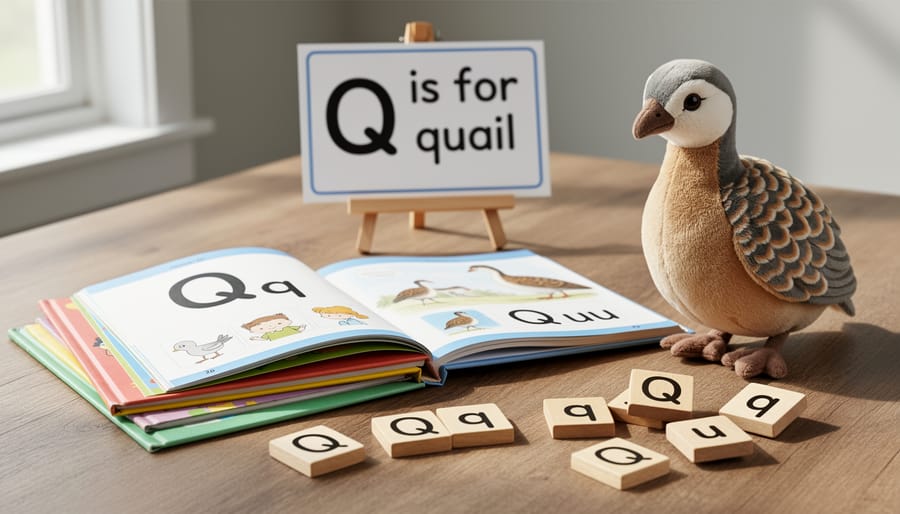
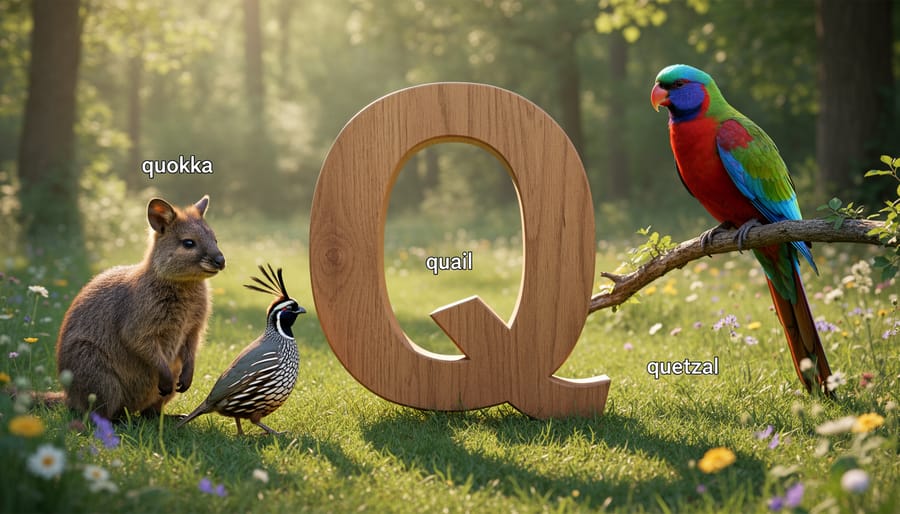
This alphabet book takes preschoolers beyond everyday Q words and introduces fascinating animals they might never encounter otherwise. The quokka, a small Australian marsupial known for its perpetual smile, captivates young readers with its friendly appearance. Quail, with their distinctive head plumes and ground-dwelling habits, offer concrete examples of Q in the natural world. Queen bees demonstrate the qu-sound while teaching basic science concepts about hives and insect communities.
The book’s strength lies in pairing each animal with either stunning wildlife photography or richly detailed illustrations that hold a three- to five-year-old’s attention. Each page typically features the animal’s name in large, clear letters with the Q prominently displayed, plus a simple sentence describing what makes that creature special. This combination of visual appeal and vocabulary expansion makes learning Q feel like discovering hidden treasures in the animal kingdom rather than memorizing another letter.
7. Quiet Loud
Quiet Loud uses the letter Q as a springboard to explore one of preschool’s foundational concepts: opposites. Through vibrant illustrations and simple text, children follow a day in the life where quiet moments (a whisper, tiptoeing, reading) contrast sharply with loud ones (cheering, thunderstorms, laughing). Each page prominently features the word “quiet” at the top, reinforcing Q recognition while the paired scenarios help three- to five-year-olds understand comparative language they’ll use constantly.
What makes this concept book particularly effective for teaching Q is its dual-learning approach. Preschoolers absorb the letter through meaningful repetition rather than isolated drill, seeing Q in action as a real word they encounter daily. The format also invites conversation, letting caregivers ask which moments in their own day feel quiet or loud, naturally extending Q vocabulary beyond the pages and building both literacy and emotional awareness.
8. The Quarrelsome Quails
“The Quarrelsome Quails” tackles the everyday conflicts preschoolers face through a story about quail siblings who can’t agree on anything. Two young quails quarrel over who gets the best perch, the biggest seeds, and the quietest spot to rest. As tensions build, they learn that questions like “How would you feel?” and “What if we share?” can transform quarrels into cooperation. The book naturally reinforces the Q sound through repeated use of “quarrel,” “quail,” “question,” and “quiet,” while teaching essential conflict resolution skills.
What makes this Q book particularly valuable for preschoolers is its focus on relatable emotions. The quails’ frustrations mirror typical preschool disputes over toys, space, and attention. Simple dialogue and expressive illustrations help young children identify feelings and practice empathy. The resolution shows characters using their words to solve problems, a crucial social skill for this age. Parents and educators can pause during reading to ask, “What would you do?” or “How is this quail feeling?” extending the learning beyond letter recognition into emotional intelligence development.
9. My Q Word Book
My Q Word Book takes a straightforward, methodical approach that makes it an ideal first Q resource for preschoolers just beginning their alphabet journey. Each page features a single Q word paired with a clear, uncluttered photograph or illustration, think “quilt” beside a colorful patchwork image, “queen” with a crown-wearing figure, and “question mark” with the punctuation symbol prominently displayed. This simplicity lets young learners focus entirely on connecting the letter Q with concrete objects they can identify and remember.
The book’s strength lies in its systematic vocabulary building. Rather than embedding Q words within a narrative, it dedicates individual pages to terms like “quiet,” “quick,” “quack,” and “quarter,” allowing children to absorb each word at their own pace. The repetitive format, Q word, image, repeat, creates predictability that preschoolers find comforting and aids retention. Parents appreciate that the uncomplicated layout makes it easy to practice Q sounds during short attention spans, whether flipping through a few pages before nap time or reviewing words during car rides. It works particularly well as a supplement to story-based Q books, giving children the vocabulary foundation they need to recognize Q words when they encounter them in richer narratives.
10. Quest for the Letter Q
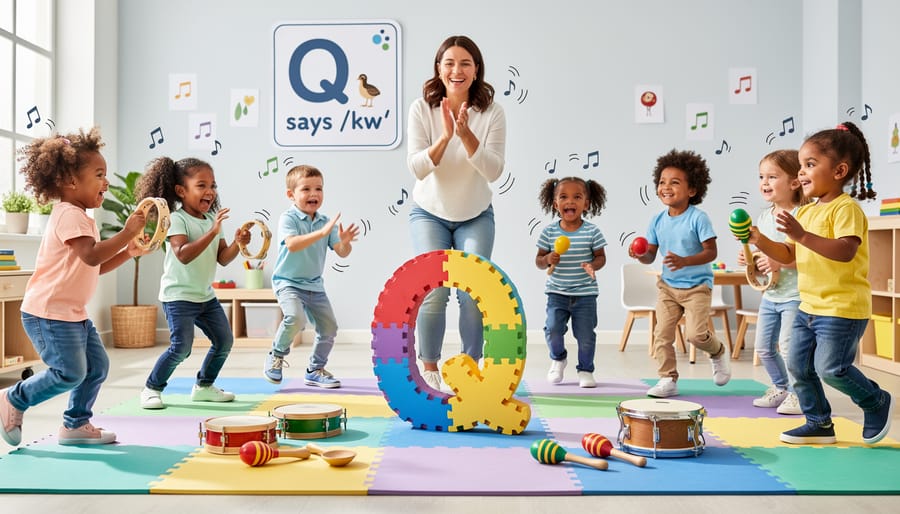
Quest for the Letter Q turns alphabet learning into an adventure story where young explorers embark on a mission to find Q items hidden throughout colorful illustrations. Each page presents a new location, a quaint village, a quiet forest, a queen’s palace, where preschoolers help characters discover objects starting with Q, from quilts to quail eggs. The interactive search-and-find format keeps three- to five-year-olds engaged while reinforcing letter recognition through repetition and context.
What makes this book particularly effective for teaching Q to preschoolers is how it transforms passive reading into active participation. Children point, name, and count Q items as they go, building both letter recognition and vocabulary. The quest narrative creates natural excitement around a letter that can feel abstract, while the variety of Q words introduced, quarter, question mark, quinoa, quiver, expands children’s understanding beyond the common queen and quilt. Parents report that the adventure framework motivates reluctant learners and makes repeated readings feel fresh rather than repetitive.
11. Quilting with Grandma
“Quilting with Grandma” weaves together family bonds and alphabet learning through a warm narrative about creating quilts across generations. The story naturally introduces Q words, quilt, quilting, squares, questions, as a child helps their grandmother piece together colorful fabric patches. What sets this book apart is its authentic representation of diverse families and cultural quilting traditions, showing preschoolers that learning the letter Q connects to real family experiences and heritage.
The illustrations capture the tactile nature of quilting with rich textures and patterns that hold young attention while reinforcing letter recognition. As characters measure, cut, and stitch, the repetition of Q sounds builds phonemic awareness without feeling forced or educational. The intergenerational relationship modeled here also validates the role grandparents and extended family play in early literacy development.
This title works particularly well for preschoolers who learn through storytelling and emotional connection rather than isolated letter drills. It demonstrates how Q appears in meaningful activities, making quilts, spending quality time, asking questions about family stories, which helps three- to five-year-olds remember the letter long after storytime ends.
12. Q Tips for Learning
“Q Tips for Learning” by Sarah Chen offers a clever dual approach: teaching the letter Q while sharing simple learning strategies that preschoolers can actually understand and apply. The book introduces Q through colorful illustrations of question marks, quilts, and queens, then pairs each Q word with a practical tip like “Ask Questions” or “Be Quiet When Listening.” The genius lies in making abstract learning concepts concrete, when discussing “Quiet,” the book shows children placing a finger on their lips, linking the Q word to a specific action they can practice.
Each page dedicates space to both Q letter formation (with dotted lines for tracing) and one learning habit, making it equally valuable for alphabet practice and social-emotional development. The preschooler-friendly language avoids educational jargon, instead using phrases like “Questions help you discover” and “Quick thinking means using your brain fast.” This combination makes it particularly useful in classroom settings where teachers want to reinforce both literacy and learning behaviors simultaneously, though the clear format works just as well for one-on-one home reading sessions with parents.
13. The Quizzical Queen
“The Quizzical Queen” follows a young monarch whose favorite activity is asking why, what, and how about everything in her kingdom. The story reinforces the Q sound through repeated uses of “queen,” “question,” “quizzical,” and “quest” as she investigates mysteries from missing cookies to disappearing rainbows. The book’s strength lies in modeling curiosity as a positive trait while giving preschoolers natural exposure to Q letter patterns. Each question the queen poses invites young readers to think along with her, making this both a letter-learning tool and an inquiry-skills builder. The illustrations feature a diverse, approachable queen character that helps children see themselves as curious investigators. Parents appreciate how the story validates the constant “why” phase while sneaking in valuable Q phonics practice through context rather than drill.
14. Quick, Quack, Quilt: A Q Sound Book
Quick, Quack, Quilt stands out as a purposefully designed phonics tool that isolates the Q sound through strategic repetition. Each page pairs a single Q word with bold, simple illustrations that help preschoolers connect the sound to its meaning. The book’s strength lies in its focused approach: rather than embedding Q words within complex narratives, it presents them in clear, memorable sequences that allow children to hear and practice the distinctive “kw” sound blend repeatedly.
Caregivers particularly appreciate the pronunciation guides printed discreetly on each page, which clarify how to emphasize the Q-U partnership without overcomplicating the reading experience. The rhythm created by repeating Q words, quick, quack, quilt, quail, builds phonemic awareness naturally, making this an ideal choice for children who learn best through pattern and repetition. The book works equally well as a first Q introduction or as reinforcement for preschoolers already familiar with other letters but struggling with Q’s unique sound.
15. Q Starts Here: Alphabet Journey
Part of a well-designed alphabet series, this book gives the letter Q its moment to shine while connecting it to the broader learning journey. Each page features multiple Q words illustrated with bright, child-friendly images, quilt, queen, question mark, quail, making the letter memorable through repetition and context. What sets this apart from standalone Q books for preschoolers is its intentional bridge to neighboring letters, showing young learners where Q fits in the alphabet sequence without overwhelming them.
The book balances focused Q instruction with preview hints of R and quick reminders of P, helping preschoolers build mental alphabet scaffolding. Clear letter tracing guides appear alongside each word, encouraging early writing practice. Parents appreciate the consistent format across the series, making it easy to continue the alphabet journey systematically. The engaging storyline follows friendly characters collecting Q items, turning letter recognition into an adventure rather than a drill.
Tips for Reading Q Books with Preschoolers
Point out the Q letter every time you encounter it on the page. Run your finger under the letter and say “Q” clearly, then emphasize the “qu” sound blend that follows in words like queen, quilt, and quick. Preschoolers learn through repetition, so revisit favorite Q books multiple times and celebrate when they spot Q letters independently or predict Q words before you read them.
Make connections between the Q words in books and real objects around your home. After reading about quilts, pull out a blanket and talk about its patterns. When a book features a queen, show pictures of real queens or let your child wear a crown during reading practice at home. These tangible connections help cement Q vocabulary in long-term memory and make abstract letters feel concrete and meaningful.
Ask open-ended questions that include Q words naturally. Try “What questions do you have about this story?” or “Why do you think the duck is quacking?” Encourage your preschooler to answer using Q words themselves, even if pronunciation isn’t perfect yet. The goal is building comfort and recognition, not mastery.
For three-year-olds, keep sessions short and playful, stopping when attention wanes. Four and five-year-olds can handle more interactive activities like finding all the Q letters on a page or acting out Q words physically. Adapt your approach to match your child’s energy and interest level rather than pushing through structured lessons. Celebrate every small victory, whether it’s correctly identifying the Q sound or remembering a new Q word from yesterday’s reading.
Common Questions About Teaching Q to Preschoolers
Why is Q harder to teach than other letters?
Q is less common in everyday words and almost always appears with U, creating a unique ‘qu’ blend that preschoolers must learn as a unit. This double-letter dependency makes Q more abstract than letters children encounter frequently in simple words.
When should preschoolers learn the letter Q?
Most preschoolers are ready to tackle Q around ages 4-5, after they’ve mastered more common letters. However, introducing Q earlier through books and play is fine, there’s no need to wait if your child shows interest in the alphabet.
Do we need special Q books or are alphabet books enough?
While general alphabet books introduce Q, dedicated Q books provide the repetition and context preschoolers need to truly grasp this tricky letter. Books centered on Q words like queen, quilt, and quiet offer multiple exposures that strengthen recognition and sound association.
How can we practice Q sounds at home?
Point out Q words during daily activities: quilts on beds, questions you ask together, quiet moments, and quick movements. Playing “Q word hunt” games, incorporating Q practice into summer reading activities and emphasizing the ‘qu’ sound when reading together all reinforce learning naturally.
If your child confuses Q with visually similar letters like O or G, use tactile methods to highlight the difference. Trace Q shapes with fingers, emphasizing the tail that extends below the line. Create Q crafts using construction paper, where children physically attach the tail to the circle. Practice writing Q alongside the confusing letter so your preschooler sees them side by side and learns to spot the distinguishing features. Most confusion resolves naturally with repeated exposure and patient, playful practice rather than correction-focused drilling.
Learning the letter Q doesn’t have to feel like a hurdle. With the right Q books for preschoolers, this tricky letter becomes an adventure filled with queens, quilts, and curious questions. The 15 books in our curated list offer something for every child, whether they respond to gentle bedtime stories, interactive games, or vibrant illustrations. The key is keeping the experience playful and pressure-free. Let your preschooler explore Q at their own pace, celebrating each new word they recognize and every “qu” sound they master. These small victories add up quickly. Pair these books with everyday moments, spotting Q on signs, asking questions together, or pointing out quiet versus loud, to keep learning active beyond storytime. You’re building more than alphabet knowledge; you’re nurturing curiosity and confidence that will support your child’s entire literacy journey.