The best Canadian book awards for kids and teens are the ones that match what you’re looking for: national honours, regional voices, or a fresh reader-focused celebration. The CCBC Book Awards from the Canadian Children’s Book Centre are the strongest starting point, with seven major awards recognizing books for children and teens. The CANREADS Awards, now in their inaugural year, celebrate Canadian stories and the people behind them. Beyond those two, the Governor General’s Literary Awards, Trillium Book Awards, Alberta Literary Awards, QWF Literary Awards, and the IODE Violet Downey Book Award each shine a light on a different corner of Canadian writing.
Why bother with award lists at all? Because they’re a trustworthy shortcut. A shelf full of new releases can feel overwhelming, and a finalist or winner label tells you someone has already done the careful reading. In this article, we explain what each award recognizes and how we chose them. We also show you how to match titles to a child’s age and find diverse voices, so you can go from list to library card in minutes.
How We Chose These Awards for Your Bookshelf
This is a curated list, not a hands-on test. We didn’t read every shortlisted book to build it. Instead, we looked at which awards make the best starting points for families and classrooms, and we weighed each one against a few simple standards.
Here’s what we looked for:
- A clear Canadian focus, celebrating Canadian stories and the creators behind them.
- Real relevance to children and teens, not just adult readers.
- A transparent, published selection process you can check for yourself.
- A healthy variety of genres, with both fiction and non-fiction in the mix.
- Range across regions, languages, and voices, including books on social issues, diversity, and LGBTQ+ experiences.
- Practical value for busy parents, teachers, and librarians.
That last point matters most to us. A good award list should save you time, whether you’re stocking a classroom shelf or choosing a bedtime read.
Keep in mind that an award list is a starting point, not a final answer. A shortlist can’t tell you whether a book suits your six-year-old’s attention span or your twelve-year-old’s comfort with tougher themes. That’s where we come in. Throughout this guide, the Book Worms team adds its own age-appropriate guidance, so you can move from a long list of finalists to the right book for your child with a little more confidence.
The Awards Worth Knowing
1. CCBC Book Awards: A Home for Canadian Books for Children and Teens
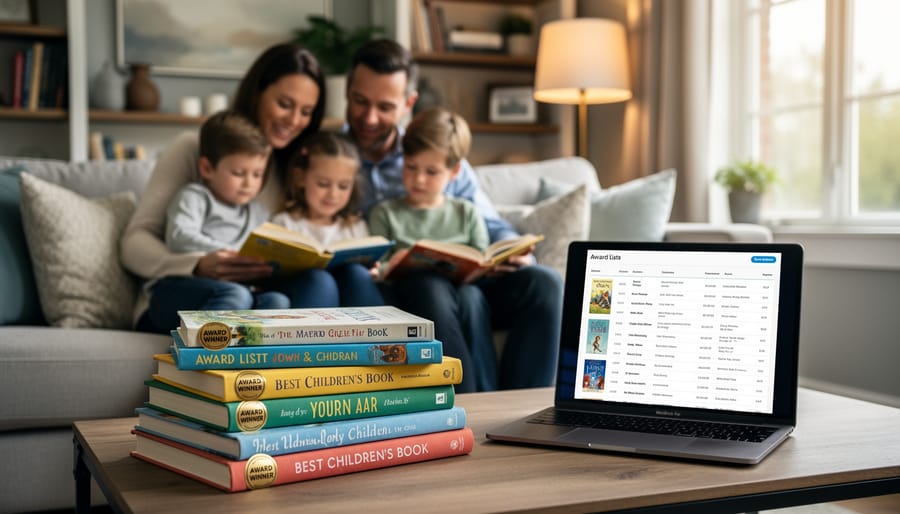
The Canadian Children’s Book Centre (CCBC) runs one of the most useful lists in the country for families and educators, because it focuses entirely on books for kids and teens. The CCBC announced seven award finalists celebrating Canadian books for children and teens, so a single program covers a wide spread of ages and formats instead of one narrow slice.
That range is what makes it so handy. A parent hunting for a read-aloud picture book and a teacher stocking a shelf for older readers can both start in the same place.
The timing matters if you like to plan ahead. Publishers submit titles well before the winners are named, which means the finalist lists give you a curated group of strong Canadian books months before any final decisions are made.
Here’s a practical way to use them: browse the finalists by category rather than just looking at the winners. Each category points toward a different kind of reader, so you can quickly narrow things down to books that suit your child’s age and interests. Treat the lists as a starting point, then preview a title or flip through a few pages before bringing it home. Finalists are often just as worthy of your bookshelf as the books that take the top prize.
2. CANREADS Awards: A Fresh Celebration of Canadian Stories
The CANREADS Awards are brand new, and 2026 marks their inaugural year. They exist to celebrate Canadian stories and the people behind them, which makes them a lovely fit for families and classrooms hoping to bring more homegrown reading into their routines.
What stands out is how the awards gather the whole reading community in one place. Authors, readers, reviewers, and supporters all come together to honor the stories that matter to them. That sense of shared excitement can be contagious, especially for kids who love knowing the books on their shelf are part of something bigger.
The awards feature finalists across multiple categories, and winners were celebrated on May 28, 2026. Since it’s a first-year awards program, there’s no long track record to lean on yet, but that also means every finalist list is a fresh discovery.
Here’s a simple way to use it: browse the category finalists and look for titles that suit your child’s age and interests. Not every category will be aimed at young readers, so a quick scan of each finalist’s description will help you spot the kid-friendly options. Think of the lists as a starting point, then check an age range or flip through a few sample pages before you bring a book home.
3. Governor General’s Literary Awards: National Recognition for Young People’s Literature
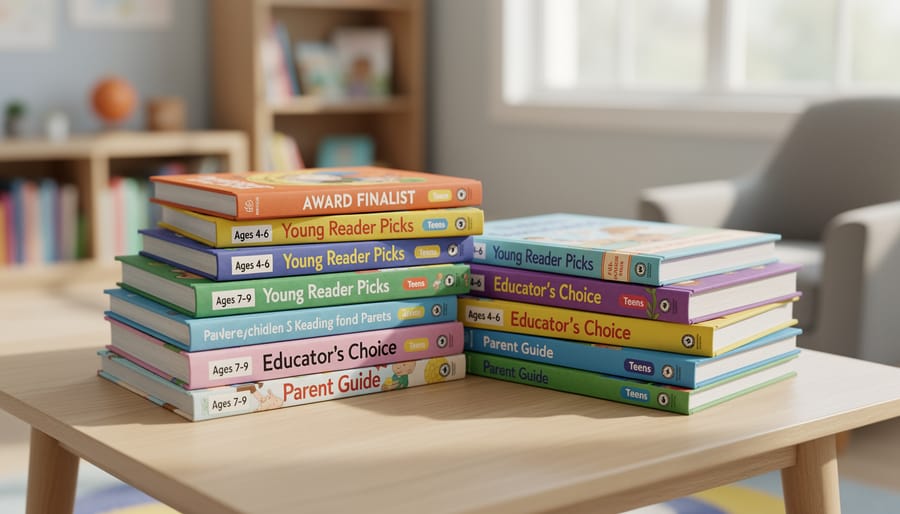
The Governor General’s Literary Awards are one of the country’s best-known honours for Canadian writing, and they include recognition for young people’s literature. That makes them a handy reference when you want books that have been judged on craft, not just popularity.
For families and educators, the real value is in the quality of the work. Look closely at how a story is told and, in picture books, how the illustrations and text work together to carry the emotion. These are the books that reward a second read and a slow look at the pictures.
Award-recognized titles also tend to give you plenty to talk about. A thoughtful story can open conversations about feelings, friendships, and big questions, whether at bedtime or during circle time in a classroom.
A simple way to use the awards is to browse the young people’s literature recognition and jot down a few titles that match your child’s age. Then flip through each one yourself before sharing it. Reading a few pages tells you quickly whether the themes, vocabulary, and pacing suit your reader.
4. Trillium Book Awards: Celebrating Ontario Voices
The Trillium Book Awards are a regional honour that spotlights writing from Ontario. For families and teachers in the province, that can be a lovely way to find stories rooted in places a child might actually recognize, like local neighbourhoods, familiar seasons, and the mix of communities across Ontario.
Regional awards matter because they surface books that national lists can sometimes overlook. A child who sees their own city, accent, or family traditions on the page often connects with a story more deeply. Even if you live elsewhere, these books offer a window into everyday Ontario life.
When you browse the lists, check the age range on each title first. Then try reading a few sample pages together to see whether the voice and themes suit your reader.
5. Alberta Literary Awards: Prairie and Foothills Stories for Young Readers
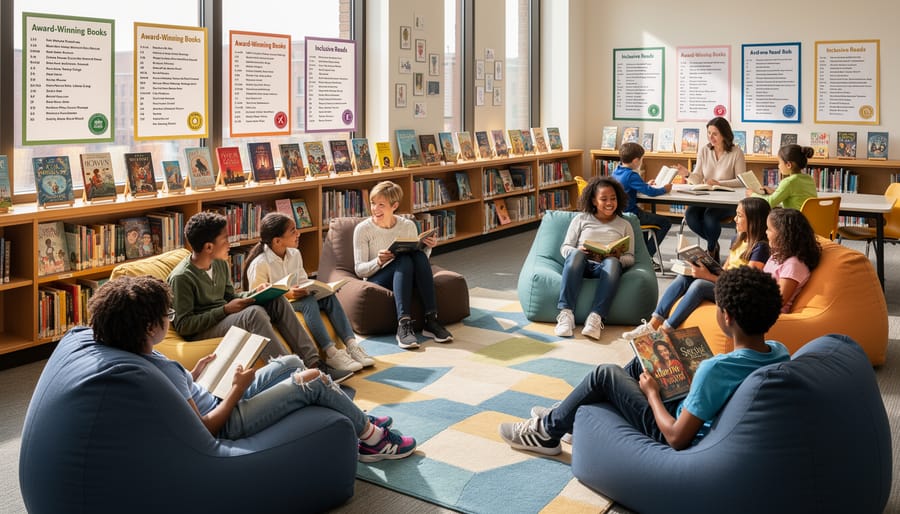
Alberta’s provincial literary awards are a lovely way to meet writers and illustrators who call the prairies and foothills home. Because they recognize Alberta creators, including those writing for children, they can point you toward stories shaped by wide skies, small towns, ranch country, and growing cities that your young readers might not find on a national list.
For parents, a provincial list makes a friendly starting point for a family reading night. For educators, here’s a simple tip: when you’re building a regionally diverse classroom library, pair an Alberta pick with titles from other provinces’ awards. Students can then compare how setting, weather, and community shape a story, which makes a great springboard for discussion and for noticing how different places look in books.
6. QWF Literary Awards: Quebec’s English-Language Voices
Quebec is a bilingual, multicultural province, and its English-language writers often get less attention than their French-language neighbours. The Quebec Writers’ Federation (QWF) literary awards help change that by putting a spotlight on English-language writing from Quebec, including work for young readers.
For families and teachers, that makes the QWF lists a handy place to look for fresh perspectives. Stories shaped by life in a province where French and English share the same streets can offer a different view of community, language, and belonging than you might find elsewhere in Canada.
Here’s a simple way to use them: browse the shortlisted titles, then check each book’s age range and read a few sample pages before sharing it. If you’re building a classroom library, adding a few Quebec voices helps your shelf reflect the full range of Canadian experience.
7. IODE Violet Downey Book Award: A Longtime Pick for Children’s Literature
The IODE Violet Downey Book Award is a handy reference if you’re building a shelf of Canadian children’s books. Its focus is on books for young readers, which makes it a natural fit for school and home libraries alike. Because it concentrates on children’s literature rather than books for all ages, you can browse its recognized titles without wading through a lot of adult fiction first.
Here’s a practical way to use it: pick up a title from the award’s list, then check the age range on the cover or in the publisher’s description before you commit. Award recognition tells you a book is well regarded, but you still know your reader best. Librarians and teachers can also pair these picks with finalists from other awards in this guide to give students a wider mix of voices and styles.
How to Match Award Winners to Your Child’s Age and Interests
An award tells you a book is well made. It does not tell you the book is right for your child. A beautifully written middle-grade novel can sit comfortably with a ten-year-old and still overwhelm a seven-year-old who reads at the same level.
Start with the age range on the cover or publisher page. Then read a few sample pages, either in a bookstore, at the library, or in an online preview. Check the vocabulary, the length of the paragraphs, and how much the pictures carry the story.
Format matters too. Picture books lean on illustration and read-aloud rhythm. Early readers use short sentences and repetition to build confidence. Middle-grade novels bring longer plots and bigger feelings, while teen titles often tackle heavier themes, so preview those before you hand them over.
Don’t stop at the winners. The finalists lists from the CCBC Book Awards, the CANREADS Awards, and the other prizes in this guide are full of strong books, and a finalist may suit your child better than the top pick. Browse by category, then match the title to your child’s interests, whether that’s animals, friendship, history, or space.
Our literature team also suggests reading with your child when a story touches on sensitive topics, and cross-checking a title against unbiased book reviews before you buy. Awards open the door. Your child’s comfort and curiosity decide whether the book gets read.
Using Award Lists to Find Books With Diverse Voices and Social Themes
Award finalist lists are a handy way to find stories that reflect many kinds of families and experiences. Because the CCBC Book Awards and the CANREADS Awards both highlight finalists across several categories, you can browse beyond a single winner and spot books about identity, friendship, inclusion, racism, gender equality, and LGBTQ+ families. Regional lists, like the Trillium or QWF awards, can add voices from specific communities that national lists might not surface.
Try scanning a finalist list for blurbs or subject tags that mention a theme you want to explore. A picture book about a new friend may open a gentle talk about belonging, while a teen novel might tackle bigger questions about fairness and identity.
Whatever you choose, preview the book first. A quick skim of the text and illustrations helps you judge whether the tone, vocabulary, and subject matter suit your child or students. You know them best.
After reading, leave room for conversation. Simple questions work well:
– How did this character feel, and why?
– Has anything like this ever happened to you or someone you know?
– What would you have done differently?
There are no wrong answers. The goal is curiosity, empathy, and a child who feels heard.
Common Questions About Canadian Children’s Book Awards
Are the CANREADS Awards new?
Yes. 2026 is the inaugural year, with finalists in multiple categories and winners celebrated on May 28, 2026. The awards focus on Canadian stories and the people behind them.
When are CCBC winners announced?
Winners for the CCBC Book Awards will be announced on Monday, October 27th. The Canadian Children’s Book Centre has announced finalists for seven major awards celebrating Canadian books for children and teens.
Are award-winning books always right for every age?
Not always. An award tells you a book is well made, but it doesn’t tell you whether the themes, length, and reading level suit your child, so check the age range and skim a few pages first.
Where can parents find finalist lists?
Start with the websites of the CCBC Book Awards and the CANREADS Awards, where finalists are highlighted by category. Your local library or school librarian can also point you to current lists.
Parents often ask which single award is “the biggest,” and the honest answer is that it depends on what you need. The Governor General’s Literary Awards carry national recognition, while the CCBC Book Awards focus squarely on books for children and teens, so many families use both.
If you’re shopping for very young readers, award lists are only one tool. Our 2-year-old book picks and preschool Q books are good companions for toddlers and preschoolers. For older kids who love action, our adventure book guide helps you match a finalist to a reader’s taste.
Final Thoughts: Let Awards Guide You, Then Let Your Child Lead
Canadian book awards are a trustworthy place to start when you’re building a shelf for young readers. The national honours and the regional lists each bring something different, and together they widen the range of voices and stories a child gets to meet.
Still, no list knows your child the way you do. A shiny seal can point you toward a great story, but curiosity should have the final say. If a book gets giggles, endless questions, or a request to read it again tomorrow, it’s doing its job.
So browse the finalists, sample a few pages, and let your reader lead the way. When you’re ready for more, we’d love to have you explore the other Book Worms reviews and guides, where we’re always happy to help you find the next great read.